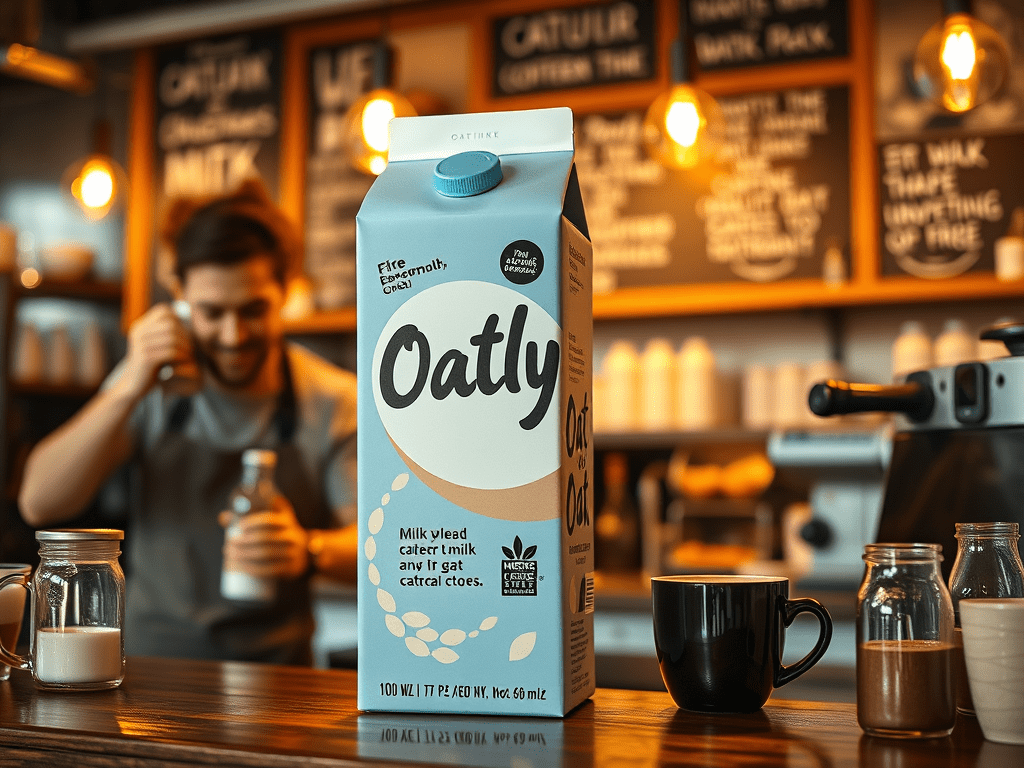
From barista oat milk to brand rebellion: how Oatly turned product into philosophy.
The Best Brands Don’t Sell Products, They Sell Perspective
Oatly doesn’t just sell oat milk. It sells attitude. Identity. A cultural critique wrapped in a carton.
Where most food and beverage brands compete on taste, nutrition, or price, Oatly competes on belief. It repositions milk as outdated. It calls out dairy lobbyists. It challenges the tone of advertising itself.
The result? A milk alternative brand that didn’t just disrupt a category, it reshaped how consumers think about the products they consume and the companies that sell them.
This post unpacks how Oatly used cultural branding, vision-driven innovation, and a uniquely provocative voice to build not just a fan base but a following.
Act One: The Product No One Was Asking For
Let’s be honest before Oatly, most people weren’t begging for oat milk. Soy and almond had saturated the alt-milk space. Dairy still dominated fridges. Baristas were skeptical.
But Oatly wasn’t responding to a mass outcry. It was responding to cultural momentum:
- Climate anxiety
- Dietary shifts
- Sustainability fatigue
- Consumer exhaustion with corporate dishonesty
It spotted a niche of consumers ready for disruption even if they hadn’t articulated it yet.
That’s foresight over feedback. And that’s how movements begin.
Cultural Branding 101: Be More Than Better
Cultural branding isn’t about proving superiority. It’s about tapping into identity, resistance, and values.Oatly didn’t market itself as “healthier” or “lower-calorie.” It positioned itself as:
- Anti-dairy
- Anti-greenwashing
- Anti-boring
From the tone on the packaging to the self-aware ad campaigns, Oatly built a brand that felt more like a cultural magazine than a food label.
Their famous campaign:
“It’s like milk, but made for humans.”
wasn’t just cheeky, it was positioning. A single line that turned dairy into the outdated option.
The Power of Brand Voice (and Why It Should Make People Feel Something)
No brand tone is more studied in branding schools right now than Oatly’s.
Why?
Because it broke every “best practice” rule. Long paragraphs on packaging. Meta commentary. Self-deprecating humour. Minimal product description.
But it worked because it was consistent, clever, and emotionally resonant. It sounded like a brand run by real people with real convictions not focus groups. It turned packaging into publishing. Shopping into storytelling.
The result? People didn’t just drink Oatly. They read Oatly. Talked about it. Photographed it. Laughed with it.
That’s how voice becomes a business asset.
Product as Cultural Statement
Yes, the oat milk foams well. Yes, it works in coffee. Yes, it’s sustainable.
But none of that was the marketing headline. What Oatly sold was participation in a better system. Buying oat milk wasn’t just consumption, it was a small act of rebellion.
Even their decision to go public with climate impact data on packaging? That wasn’t virtue signalling. It was brand alignment. Their customer didn’t just want good taste. They wanted brands that meant something.
And Oatly delivered both.
Distribution as a Brand Strategy
One of Oatly’s smartest moves? Partnering with baristas before going mainstream.
Coffee shops became their on-the-ground marketing machine. Instead of hitting supermarket shelves first, they hit espresso machines, earning credibility among a culture-driving segment.
When consumers later saw Oatly in grocery stores, it already felt cool. Trusted. Integrated into lifestyle.
This is strategic seeding at its finest.
Oatly didn’t force its way into people’s routines. It earned its way in.
What Challenger Brands Can Learn
You don’t have to be an oat milk startup to use Oatly’s strategy. Here’s what other brands can take from the playbook:
1. Lead with conviction, not comparison.
You don’t need to be “better than the market leader.” You need to believe something stronger.
2. Build a brand world, not just a product.
Use voice, values, design, and behaviour to create a cultural universe people want to live in.
3. Write like a person. Speak like you care.
People don’t want sterile. They want strange, smart, specific. Dare to sound like someone, not everyone.
4. Leverage cultural entry points.
Go where your tribe already gathers. Oatly didn’t convince baristas, they empowered them.
5. Take risks that match your values.
Whether it’s packaging tone or policy stances, stay consistent with what you claim to stand for. Otherwise, it’s just performance.
Final Word: Don’t Just Join the Culture, Challenge It
Oatly didn’t ride the wave. It redirected it. It didn’t just capitalise on sustainability, it added satire. It didn’t just offer a dairy alternative, it called out the entire category with a smile and a shrug.
In a landscape of safe brands, Oatly is a masterclass in what happens when you build your company around a clear, provocative worldview and back it with product, design, and distribution that deliver.
That’s not just branding.
That’s movement-making.



 Certified And Creative
Leave a comment