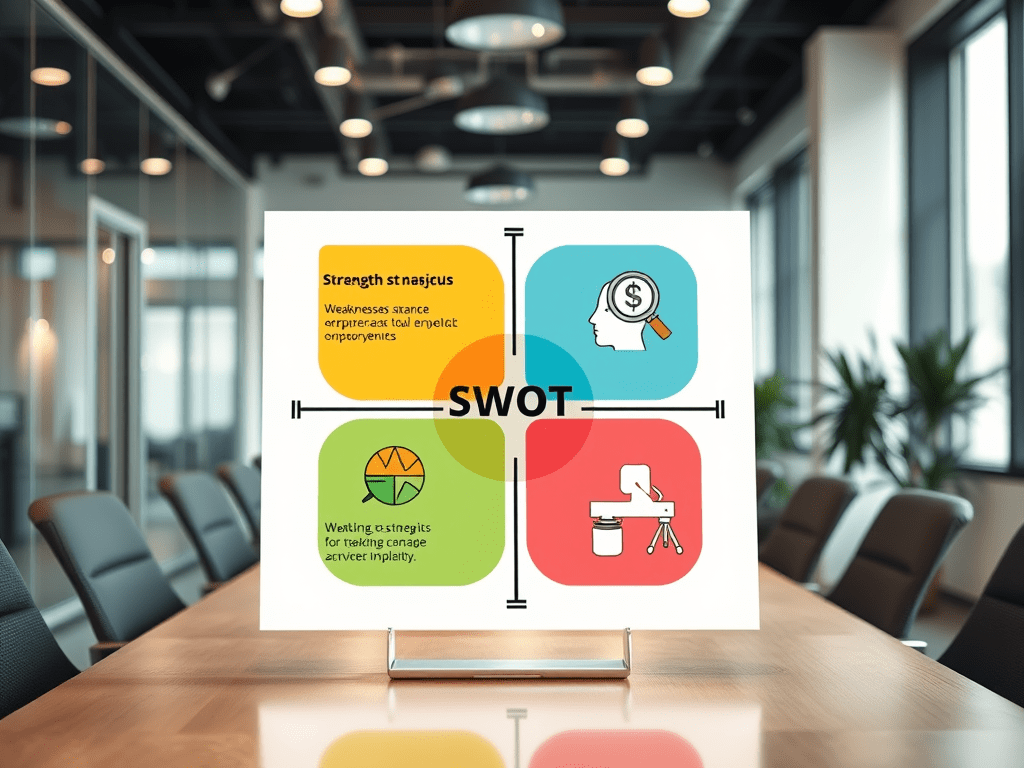
Practical, actionable use of SWOT to create strategic clarity and marketing momentum.
SWOT Deserves Better
It’s one of the most overused and underleveraged tools in marketing. You’ve seen it: a neat 2×2 grid, filled in out of obligation, slapped into the middle of a strategy deck, then forgotten.
But SWOT isn’t just an academic exercise. When used well, it’s a strategic map. A mirror. A launchpad.
It helps you clarify what matters, sharpen your focus, and build marketing strategy that actually leverages your strengths, protects against your weaknesses, anticipates threats, and turns opportunities into moves.
This post breaks down how to take SWOT from stale to strategic and make it a live part of your brand-building playbook.
SWOT 101: The Basics (Still Matter)
SWOT stands for:
- Strengths: What your brand is great at. Unique value, capabilities, reputation, reach.
- Weaknesses: Gaps in your business. Poor positioning, lack of resources, unclear messaging.
- Opportunities: External trends or shifts you can capitalise on.
- Threats: External risks that could hurt growth: competitors, legislation, market shifts.
At a glance, it’s simple. But simplicity is powerful, if you go deep.
Let’s break down how to use each quadrant in a way that fuels actual decisions.
Strengths: What Do You Own That Others Can’t Touch?
Start here. But go beyond generic answers.
Your brand’s strengths should be viewed through a strategic lens. Ask: what’s truly defensible? What gives us leverage? What creates trust?
Examples:
- A distinctive tone of voice (like Monzo’s honest, human UX copy)
- A cult community (like Glossier’s Into the Gloss ecosystem)
- A product-to-content pipeline that feeds growth (like Oatly’s packaging-as-marketing play)
If it can’t be copied overnight, it’s a strength worth building around.
Actionable move: Build campaigns that exaggerate your strengths. Make them impossible to ignore.
Weaknesses: Where Are You Vulnerable?
This is where brands get uncomfortable and where they often get stuck. Weaknesses aren’t failures. They’re friction points.Maybe it’s a broken onboarding flow. Or a lack of brand awareness in key markets. Or weak SEO that leaves content invisible.
The goal here is to prioritise, not panic. Identify your biggest strategic blockers and assess which ones are fixable fast, and which ones need long-term investment.
Actionable move: Choose one internal weakness and turn it into a public-facing strength. For example, if onboarding is weak, build a content series around your user journey to collect insights while building loyalty.
Opportunities: The Trend Gap
Opportunities are not about what’s trending. They’re about what’s under-leveraged in your category.
Think of Liquid Death. The opportunity wasn’t that “hydration” was trending. It was that no water brand was tapping into counterculture. They saw the emotional whitespace and claimed it.
Your job is to read the market like a culture critic. Where is attention moving? What behaviours are changing? What new values are customers expressing?
Actionable move: Run an “opportunity sprint.” Choose one trend that aligns with your brand values and build a micro-campaign around it. Small bets lead to big insight.
Threats: Get Ahead Before You’re Behind
Most brands only acknowledge threats once it’s too late. A competitor drops a better feature. A cultural shift makes your tone feel out of sync. A policy change affects your product’s viability.
Smart brands prepare early. They build backup plays. They run scenario tests.
Think of Tesla. Their threat wasn’t other car companies, it was regulatory pressure, oil industry power, and public scepticism. Their answer? Build a brand based on purpose and vision, not just product specs.
Actionable move: Choose your top two threats and build a comms or content strategy that actively reframes them. Pre-empt the narrative.
How to Make SWOT Useful (Not Just Informative)
Here’s how to make SWOT a living tool inside your brand strategy process:
1. Connect the Quadrants
Strengths and opportunities should reinforce each other. Weaknesses and threats should inform your mitigation plan. Don’t treat each box as a silo. Use them like moving pieces.
2. Turn It Into a Playbook, Not a PowerPoint
For every item in each quadrant, write a strategic response:
- What will we amplify?
- What will we fix?
- What will we chase?
- What will we guard against?
This transforms SWOT from diagnosis into direction.
3. Use It as a Pre-Launch Filter
Launching a new product, campaign, or partnership? Run a SWOT check first. You’ll spot blind spots and sharpen your messaging before going live.
4. Revisit It Quarterly
Markets shift. So should your SWOT. Set a recurring review to make sure it reflects new competitors, trends, and internal growth.
Real Example: Fenty Beauty’s SWOT in Action
Strength: Inclusive shade range and cultural credibility
Weakness: Limited distribution at launch
Opportunity: Growing demand for representation in beauty
Threat: Legacy brands rushing to copy the inclusivity narrative
Fenty’s marketing leaned heavily on its strength and opportunity. It flooded platforms with models that beauty had ignored. It used its launch scarcity to build anticipation. It owned the narrative before anyone else could.
That’s SWOT as strategy, not admin.
Final Word: Strategy Lives in the Specifics
The value of SWOT isn’t in filling the boxes. It’s in what you do with them.When used well, SWOT becomes a snapshot of your brand’s edge and a roadmap for how to sharpen it.
It shows you what to lean into, what to evolve, and what to prepare for. Not just as a team, but as a brand with a point of view.
So revisit it. Rethink it. But this time, don’t treat it like theory. Treat it like fuel.



 Certified And Creative
Leave a comment